
Seasonal jobs in Malta can be an excellent way to earn income, gain local experience, build confidence and enter industries such as hospitality, tourism, retail, events and customer support. The strongest candidates do not wait until the busiest weeks to start looking. They understand Malta’s hiring rhythm, prepare early, and apply with a CV that proves they can be reliable when teams are under pressure.
Key takeaways
- Seasonal hiring in Malta is strongest in areas connected to tourism, hospitality, retail, events, transport support and customer service.
- Apply early. Many employers plan seasonal teams before peak demand begins, especially for front-of-house and high-volume service roles.
- Reliability, availability and attitude often matter as much as formal experience for entry-level seasonal roles.
- A clear CV should highlight languages, customer service experience, flexible hours, local availability and fast learning.
- Before accepting an offer, ask about contract terms, working hours, overtime arrangements, training, transport and pay frequency.
What counts as seasonal work in Malta?
Seasonal work is employment that increases during a predictable busy period. In Malta, this often links to tourism, hospitality, summer events, language schools, cruise activity, retail promotions and temporary administrative demand.
Not every seasonal job is casual or short-term. Some start as temporary roles and become long-term positions when an employer finds someone dependable. For job seekers, seasonal work can be a route into Malta’s labour market, a way to test an industry, or a practical option between studies, travel or career moves.
Common seasonal arrangements include fixed-term contracts, temporary part-time shifts, full-time summer work, event-based work, weekend roles and replacement cover during staff leave. The exact terms should always be confirmed with the employer before you accept.
A seasonal role is not just a stopgap. Treated well, it can become a reference, a skills bridge and sometimes a permanent opportunity.
NextMove Career Insights
Malta’s peak tourism season creates many opportunities, but seasonal hiring can also happen around Christmas retail, major events, school holidays and business support periods.
Where seasonal jobs are most common
Seasonal work in Malta is concentrated in industries that experience sharp changes in customer demand. If you are open-minded about role type, you can often find opportunities that match your existing skills more closely than expected.
Hospitality and catering
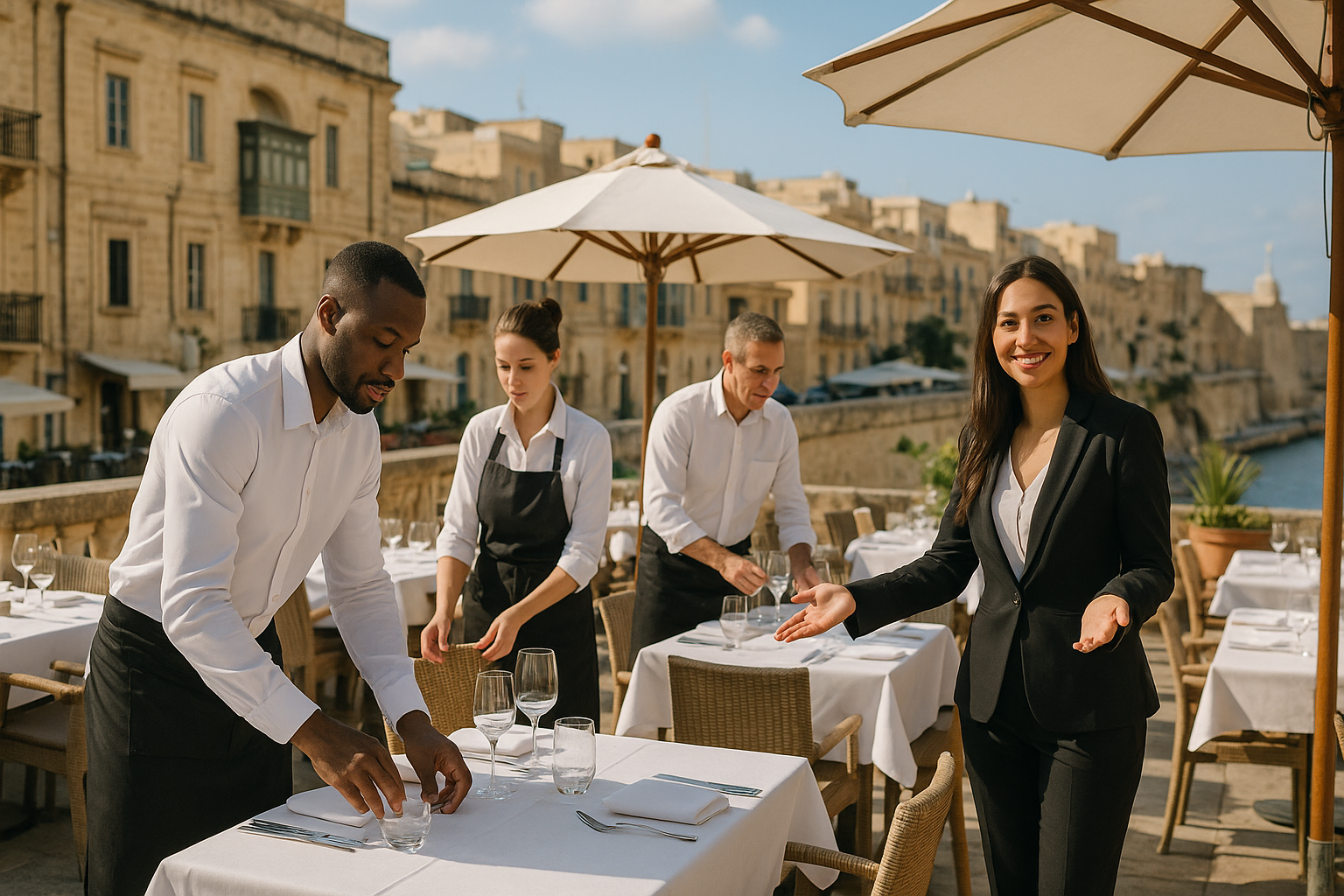
Hotels, restaurants, bars, beach clubs, cafes and catering teams often need extra staff during busy periods. Roles may include waiter, server, bartender, runner, host, kitchen porter, commis chef, housekeeping attendant, receptionist or night audit support.
If hospitality is your target, browse relevant opportunities through waiter, server and bartender jobs or explore all current roles on NextMove job search.
Tourism, travel and guest services
Tour operators, excursion providers, language schools, accommodation providers and visitor-facing businesses often need people who can communicate clearly and remain calm during busy days. Languages are a major advantage, especially when combined with local knowledge and strong customer service.
Retail and sales support
Retailers may hire seasonal staff for tourist-heavy months, festive periods, stock movement, promotions and extended opening hours. Roles can include sales assistant, cashier, stockroom assistant, merchandiser or customer support adviser.
Events and entertainment
Malta has a busy events calendar across music, corporate hospitality, private functions, festivals and conferences. Seasonal event work can include stewarding, ticketing, bar service, set-up crew, brand ambassador work and guest registration.
Customer service and operations
Some businesses need temporary help when customer volumes rise. This can include email support, call handling, reservations, data entry, scheduling, logistics coordination and administrative cover. Candidates with strong written English, Maltese or additional languages may be particularly competitive.
| Sector | Typical seasonal roles | Useful strengths | Where to start |
|---|---|---|---|
| Hospitality | Server, bartender, host, kitchen porter, housekeeping | Stamina, teamwork, polite service, flexible shifts | Hospitality roles |
| Tourism | Guest assistant, tour support, reservations, reception | Languages, local knowledge, problem solving | Browse jobs |
| Retail | Sales assistant, cashier, stock assistant | Product awareness, patience, attention to detail | Browse jobs |
| Events | Steward, registration assistant, bar staff, runner | Energy, punctuality, clear communication | Browse jobs |
| Customer support | Reservations, email support, call handling, admin cover | Written communication, organisation, calm under pressure | Customer service roles |
When to apply for seasonal jobs
The best time to apply depends on the sector. As a general rule, apply before the busy period is visible to everyone else. Employers that rely on seasonal staff need time to screen candidates, run interviews, organise documents, prepare rosters and train new starters.
For summer-facing roles, many candidates begin too late. By the time restaurants, hotels and event operators are already at full speed, they may still hire urgently, but the strongest openings can be filled. Early applications give you more choice and more time to compare offers.
A practical timing guide
| Hiring period | Best time to prepare | Common opportunities |
|---|---|---|
| Spring into summer | Late winter and early spring | Hotels, restaurants, beach clubs, tours, language schools, events |
| Mid-summer urgent hiring | Immediately, with strong availability | Replacement staff, extra shifts, high-volume service roles |
| Autumn events and conferences | Late summer | Event support, hospitality, corporate guest services |
| Festive retail and hospitality | Early autumn | Retail, catering, hotels, restaurants, delivery and stock support |
Even if you are not ready to start immediately, create a shortlist of roles and employers early. A well-timed application often beats a rushed application sent during peak competition.
What seasonal employers look for
Seasonal employers need people who can become useful quickly. They are often hiring while managers are already busy, so they look for clear signals that a candidate is reliable, available and easy to train.
Availability
Your availability should be specific. Instead of writing “flexible”, explain whether you can work evenings, weekends, public holidays, split shifts or full-time hours. If you have study commitments, another job or travel plans, be honest early.
Reliability
In seasonal teams, one missing person can affect the whole shift. Employers value candidates who arrive on time, communicate early, follow instructions and stay composed during pressure.
Customer-facing confidence
Many seasonal roles involve visitors, guests and customers who may be tired, rushed or unfamiliar with Malta. A calm tone, good manners and practical problem-solving are valuable even in junior roles.
Languages
English is widely used in Malta workplaces, while Maltese may be important for some local-facing roles. Other languages can help in tourism, hospitality, retail, reservations and guest services. Do not exaggerate your language level; describe it accurately.
Fast learning
Seasonal onboarding may be shorter than in permanent roles. Candidates who can learn menus, booking systems, product ranges, safety procedures or customer scripts quickly are attractive to employers.
For seasonal hiring, employers often ask one practical question: can this person help the team quickly without creating extra pressure?
NextMove Recruitment Team
How to build a seasonal CV
A seasonal CV should be direct, relevant and easy to scan. Hiring managers may review many applications quickly, so your first page needs to answer the basics: who you are, what you can do, when you can work and why you suit the role.
If your CV needs structure, use the NextMove CV Builder to organise your experience clearly before applying.
What to include near the top
- Your current location in Malta or your planned arrival date if applicable.
- Your phone number and professional email address.
- Your availability, including start date and preferred working pattern.
- Relevant languages and level of fluency.
- A short profile focused on service, reliability and role fit.
Example seasonal CV profile
“Customer-focused hospitality candidate based in Sliema, available for evening and weekend shifts from April. Experienced in busy cafe service, cash handling and guest communication. Confident in English and Italian, with a calm approach during peak periods.”
Skills worth highlighting
- Customer service and complaint handling.
- Table service, bar support, reservations or reception.
- Point-of-sale systems and cash handling.
- Stock control, merchandising or order preparation.
- Food hygiene awareness, where relevant.
- Teamwork in fast-paced environments.
- Languages and intercultural communication.
- Driving licence, if relevant to the role.
If you can only work certain days, say so. Employers can often work with clear availability, but unexpected restrictions after hiring can damage trust quickly.
How to apply smarter
Seasonal hiring can move quickly, but that does not mean you should apply randomly. A focused approach helps you spend less time sending applications and more time having useful conversations.
1. Choose your target sectors
Pick two or three sectors where your skills make sense. If you have cafe experience, hospitality and events may be natural. If you have office skills, customer support, reservations and admin cover may fit better.
2. Prepare one strong CV and adapt the profile
You do not need to rewrite your whole CV for every seasonal role. Adapt the short profile and top skills so they match the job advert. A restaurant manager and a retail manager may value different examples.
3. Apply through trusted channels
Use reputable platforms, employer career pages and verified recruitment channels. On NextMove, you can browse current jobs in Malta and filter by role type or category where available.
4. Follow up politely
If you have not heard back after a reasonable period, a short follow-up can help. Keep it polite and practical: confirm your interest, availability and phone number. Do not send repeated messages every day.
5. Keep your phone ready
Seasonal employers may call quickly, especially when shifts need to be filled. Use a professional voicemail message and check missed calls. If you cannot answer, reply as soon as possible.

Questions to ask before accepting a seasonal role
A seasonal job can be a great opportunity, but you should understand the terms before you commit. Asking clear questions is professional, not difficult. It helps both sides avoid misunderstandings.
Before starting, make sure you understand your role, start date, pay arrangements, expected hours and who you report to. Written confirmation protects both the candidate and the employer.
Useful questions
- Is this a fixed-term, part-time, full-time or casual arrangement?
- What is the expected start and end date?
- How many hours are usually available each week?
- Are evening, weekend or public holiday shifts required?
- How is the rota shared, and how much notice is normally given?
- What training is provided before the first shift?
- Is uniform, equipment or specific footwear required?
- When and how is pay issued?
- Who should I contact if I am sick or delayed?
- Is there a possibility of extension or permanent employment?
Foreign job seekers and work eligibility
Malta attracts many international job seekers, especially for tourism and hospitality work. Before applying, understand your right to work and the documents an employer may need. Requirements can vary depending on nationality, residence status and the nature of the employment.
Do not rely on informal advice from social media. For official information, check the relevant Maltese authorities, such as Jobsplus and Identità. If your situation is complex, seek guidance before accepting a role.
Employers also need clarity. If you are already in Malta, state your status honestly. If you are abroad, explain your realistic arrival date and whether you require employment-related processes before starting.
Documents to keep organised
- Identification document or passport.
- Residence or work-related documentation, where applicable.
- Updated CV.
- References or reference contact details.
- Certificates relevant to the role, if requested.
- Bank details and tax-related information when formally employed.
Interview tips for seasonal roles
Seasonal interviews are often practical and direct. Employers want to know whether you can do the job, fit the team and be available when needed. Prepare short examples that show you have handled busy situations before.
Questions you may be asked
- When can you start?
- What days and hours can you work?
- Have you worked in a busy customer-facing role before?
- How would you handle a difficult customer?
- Can you work weekends or public holidays?
- Which languages do you speak confidently?
- Are you looking only for seasonal work, or would you consider staying longer?
Strong answer example
If asked about handling pressure, you could say: “In my previous cafe role, the busiest period was late morning. I learned to prioritise orders, communicate clearly with the kitchen and stay polite with customers even when there was a queue. If I was unsure, I asked the shift lead quickly rather than guessing.”
This answer works because it is specific, realistic and focused on behaviour. It does not claim perfection. It shows that you understand teamwork and pressure.
What to bring
- A copy of your CV, printed or easy to send digitally.
- Your availability for the next few weeks.
- Any relevant certificates or documents.
- Questions about the role and rota.
- A professional attitude, even if the setting is informal.
Seasonal job search checklist
Use this checklist to keep your search organised and reduce last-minute stress.
- Decide which sectors fit your skills and availability.
- Update your CV with a seasonal profile and clear contact details.
- Add languages, shift availability and start date near the top.
- Prepare short examples for customer service, teamwork and pressure.
- Search current roles on NextMove.
- Apply early to priority roles before peak hiring.
- Track applications, contacts and interview times.
- Check work eligibility and documents if you are not already authorised to work.
- Ask about contract terms, hours and pay before accepting.
- Keep communication professional from first message to final shift.
The candidates who stand out are not always the most experienced. They are the ones who make hiring easier: clear CV, clear availability, clear communication.
NextMove Career Insights
FAQs
When is the best time to look for seasonal jobs in Malta?
Start before the busy period. For summer-facing hospitality and tourism roles, preparing in late winter or early spring can give you more choice. Urgent roles may still appear during peak season, but competition and pressure can be higher.
Can seasonal jobs in Malta become permanent?
Yes, some can. It depends on the employer’s needs, your performance and whether there is long-term demand after the season. If you are interested in staying, mention this professionally once you understand the role.
Do I need experience for seasonal hospitality work?
Experience helps, but it is not always essential for entry-level roles. Employers may consider candidates who show reliability, good communication, willingness to learn and availability for busy shifts.
What should I put on my CV for a seasonal job?
Include your availability, location, languages, customer service experience, relevant skills and a short profile tailored to the role. Keep it clear and easy to scan.
Are seasonal jobs only available in summer?
No. Summer is important for tourism and hospitality, but seasonal hiring can also happen around festive retail, events, conferences, school holidays and temporary business cover.
Where can I find seasonal jobs in Malta?
You can search current opportunities on NextMove, check relevant employer pages and follow reputable recruitment channels. Keep your CV ready so you can apply quickly when suitable roles appear.
Final thoughts
Seasonal jobs in Malta can be fast-paced, demanding and rewarding. They can help you gain local experience, meet employers, strengthen your CV and discover whether a sector suits you long term.
The key is preparation. Apply early, communicate clearly and treat every shift as part of your professional reputation. In a close-knit job market, reliability and attitude travel far.
Whether you want summer hospitality work, event shifts, retail support or a guest-facing tourism role, a focused search will give you a better chance of finding a position that fits your availability and goals.
Start your seasonal job search with NextMove
Ready to find seasonal work in Malta? Explore current vacancies, prepare a clear CV and take your next step with confidence.