
A strong interview in Malta is rarely about giving perfect answers. It is about showing that you understand the role, the company, the local working environment and how you can make life easier for the employer. Whether you are applying for your first job, changing sector, returning to work or moving to Malta, preparation can turn nerves into confidence.
Key takeaways
- Malta employers often value practical communication, reliability and cultural fit as much as technical skill.
- Prepare examples from your experience, not memorised speeches. Use clear situations, actions and results.
- Research the company, role, commute, work pattern and sector before the interview.
- Ask informed questions about expectations, onboarding, team structure and next steps.
- Follow up politely after the interview and keep applying until you have a signed offer.
Why Malta interviews can feel different
Malta has a close-knit labour market. Employers often hire not only for skills, but also for trust, attitude and whether someone will fit well into a small team. In many businesses, especially SMEs, hospitality operators, finance firms, iGaming companies and professional services providers, one hire can have a visible impact on the whole department.
This does not mean interviews are informal or easy. It means employers are listening carefully for signs that you are dependable, adaptable and realistic about the role. They may be trying to answer questions such as: Will this person stay? Can they work with clients or colleagues from different cultures? Do they understand the pace of our sector? Can they communicate clearly?
If you are new to Malta, expect some questions about availability, right to work, relocation timing and your understanding of local working conditions. If you already live in Malta, employers may ask about notice periods, transport, flexibility and why you are moving from your current role.
The best interview answers in Malta are specific, practical and grounded in real work. Employers remember candidates who explain what they did, why it mattered and how they would apply that experience in the new role.
NextMove Career Insights
Because Malta is a relationship-driven market, professionalism matters at every step. A prompt reply, a polite tone and a well-prepared interview can help you stand out before technical questions even begin.
Before the interview: research that actually helps
Good research is not about memorising the company website. It is about understanding enough to have a useful conversation. Your goal is to connect your background to the employer's needs.
1. Understand the role behind the job title
Job titles can vary widely in Malta. A marketing executive in one company may focus on social media, while another may handle events, reporting, suppliers and campaign planning. A finance administrator may work heavily with invoices in one business and client accounts in another.
Read the job advert slowly and highlight:
- Tasks mentioned more than once.
- Systems, tools, languages or licences required.
- Whether the role is client-facing, operational, analytical or sales-driven.
- Experience listed as essential versus desirable.
- Any clues about shifts, weekends, hybrid work or travel between sites.
If you are still searching, explore current opportunities on NextMove's job listings to compare how employers describe similar roles.
2. Research the company in context
Look at the employer's website, recent updates, social profiles and company pages. For larger employers, check whether they operate in Malta only or across other jurisdictions. For regulated sectors such as finance, insurance, healthcare or education, understand the professional environment without pretending to be a legal expert.
Useful questions to answer before the interview include:
- What does the company sell or deliver?
- Who are its customers or clients?
- Is it local, international, start-up, family-run or corporate?
- What problems might this role help solve?
- What tone does the company use: formal, technical, service-led or fast-moving?
3. Check practical details early
In Malta, practical details can influence hiring decisions. Employers may ask about your availability, commute and schedule because they need to plan staffing. This is especially common in hospitality, retail, healthcare, customer support, logistics and shift-based roles.
Before the interview, confirm:
- The interview time, format and location.
- How long it may take to get there at that time of day.
- Your notice period or earliest start date.
- Your work authorisation status, if relevant.
- Any documents the employer asked you to bring.
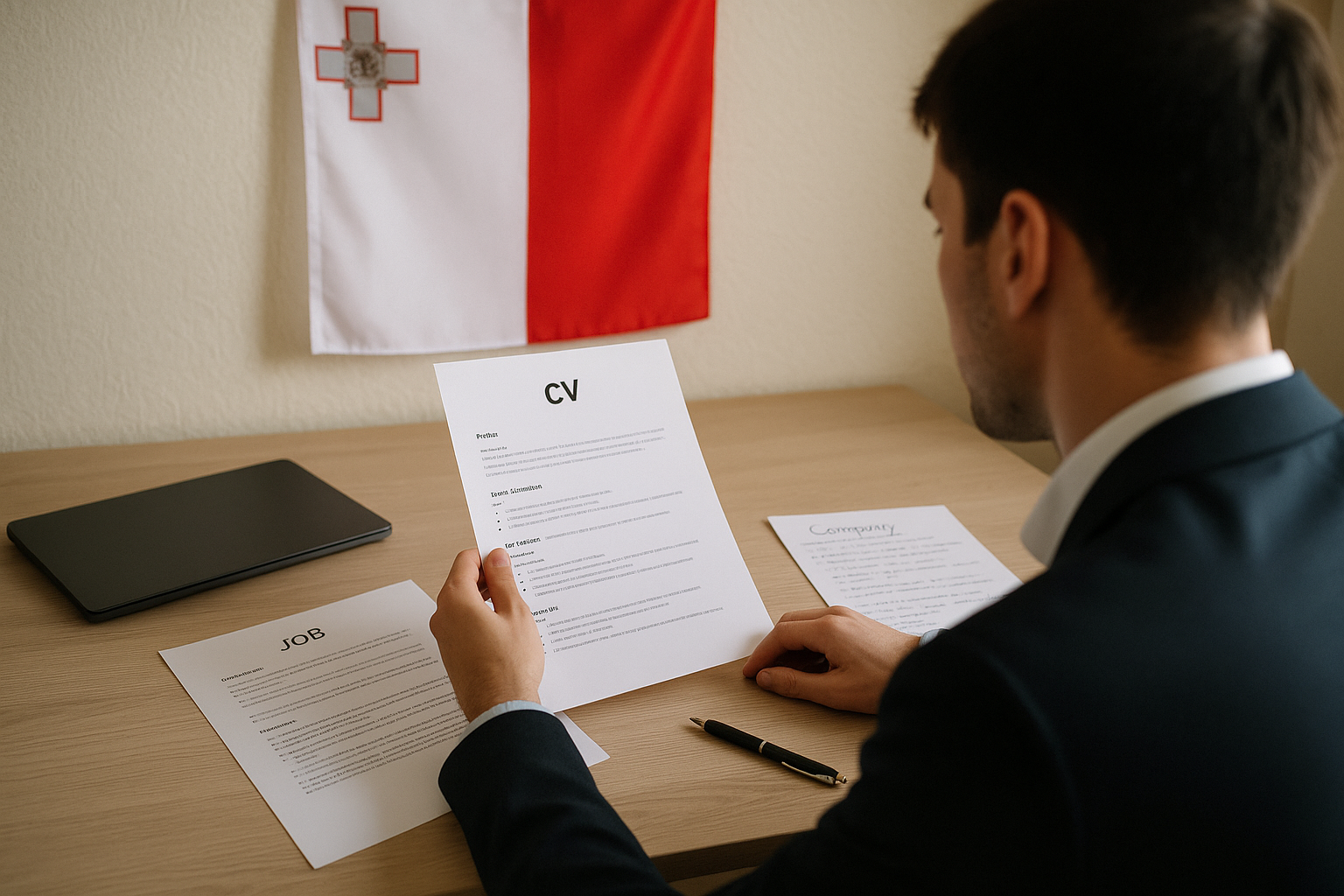
Interview questions to prepare for in Malta
Every employer has its own style, but most interviews cover a familiar set of topics: motivation, skills, past experience, behaviour and logistics. Preparing for these themes will help you answer naturally even if the wording changes.
Common opening questions
- Tell us about yourself.
- Why are you interested in this role?
- What do you know about our company?
- Why are you looking for a new opportunity?
- What attracted you to this sector?
Your answer to "Tell us about yourself" should not be your life story. Keep it focused: your current situation, relevant experience, strongest skills and why this role makes sense as a next step.
Experience and skills questions
- What experience do you have with this type of work?
- Which systems or tools have you used?
- Describe a project or task you are proud of.
- How do you manage deadlines?
- How do you handle difficult customers, colleagues or stakeholders?
For technical roles, expect more detailed questioning. Software developers may discuss code quality, testing or architecture. Accountants may be asked about reporting cycles, reconciliations or audit support. Hospitality candidates may be asked about service standards, pressure and teamwork. Healthcare and education candidates should be ready to discuss care, safeguarding, communication and professional judgement within the scope of the role.
Motivation and fit questions
- What type of team do you work best in?
- How do you receive feedback?
- What are your career goals?
- What would make you successful in this role?
- Why should we choose you?
Employers are not looking for flattery. They want to know whether your expectations match the job. A practical answer might explain that you are looking for a role where you can build expertise, contribute consistently and grow with clear expectations.
Logistical questions
- What is your notice period?
- Are you currently based in Malta?
- Do you have the right to work in Malta?
- Are you comfortable with shifts, weekends or hybrid work if required?
- What salary range are you considering?
Answer logistics honestly. If you need a permit, relocation time or a specific schedule, say so clearly. Employers can only assess your application properly when they understand your availability.
If your right to work depends on a permit or employer sponsorship, avoid giving uncertain answers. Check official guidance from sources such as Jobsplus or relevant Maltese authorities, and explain your situation accurately.
How to answer clearly without sounding rehearsed
Many candidates prepare answers, then lose confidence because they sound too scripted. The better approach is to prepare stories. Stories are flexible; you can adapt them to different questions.
Use the situation, action, result structure
A simple structure keeps your answer focused:
- Situation: Briefly explain the context.
- Action: Describe what you personally did.
- Result: Explain the outcome, learning or improvement.
For example, if asked about handling pressure, you might describe a busy month-end close, a high-volume service shift or a product launch. The key is to show your action, not only the problem.
Build a bank of examples
Before the interview, prepare five to seven examples that show different strengths. You can reuse them across many questions.
| Strength to show | Example to prepare | What the employer learns |
|---|---|---|
| Reliability | A time you kept operations moving during absence, peak demand or a deadline. | You can be trusted when work gets busy. |
| Problem-solving | A process you improved or an issue you investigated. | You do not wait passively for instructions. |
| Customer focus | A difficult customer or client interaction you handled calmly. | You protect relationships and brand reputation. |
| Teamwork | A project where you coordinated with colleagues from different functions. | You can collaborate in Malta's often multicultural workplaces. |
| Learning ability | A new system, regulation, tool or responsibility you picked up quickly. | You can adapt as the business changes. |
Be honest about gaps and weaknesses
If you have a career gap, short employment period or skill you are still developing, do not over-explain. Give a concise, calm answer and move back to what you can offer.
For example: "I have not used that specific platform yet, but I have worked with similar tools and usually learn new systems quickly. In my last role, I became confident with a new reporting tool within the first few weeks by using training materials and asking focused questions."
Candidates do not need to tick every box to make a strong impression. They do need to show self-awareness, learning ability and a practical plan for closing any gaps.
NextMove Recruitment Team
Malta-specific expectations employers notice
Interview success is not only about answers. Employers also notice how you manage communication, timing and professional behaviour.
Punctuality and communication
Arrive on time for in-person interviews and join video calls a few minutes early. If there is traffic, a transport delay or an emergency, inform the recruiter or employer as soon as possible. Malta's roads can be busy, especially during commuting hours, so plan your route rather than relying on best-case timing.
Language and clarity
Many workplaces in Malta use English as a main business language, while Maltese may be important for customer-facing or public-facing roles. Other languages can be valuable in tourism, iGaming, sales and support roles. If language requirements appear in the advert, be honest about your level.
During the interview, speak clearly and avoid over-complicated explanations. If you do not understand a question, ask politely for clarification. This usually looks better than answering the wrong question.
Dress code
Dress for the company and role. A corporate finance interview may call for formal business attire. A start-up, creative agency or tech employer may be more relaxed, but you should still look neat and intentional. Hospitality and customer-facing candidates should show that they understand presentation and service standards.
Salary conversations
Salary may come up in an early screening call or later in the process. Avoid inventing figures or relying on rumours. Instead, prepare a realistic range based on your experience, the role level and current market conversations. If you are unsure, say you are open to discussing a fair package aligned with the responsibilities.
You can also consider the full package: leave arrangements, bonuses, health insurance, training, hybrid work, parking, shift allowances, relocation support or progression opportunities where applicable. Not every employer offers the same benefits, and availability varies by sector and company.
Your interview should match your CV. Before the meeting, reread the version you submitted and be ready to explain your roles, dates, achievements and reasons for moving. If your CV needs updating, use the NextMove CV Builder before applying for more roles.
Remote and video interviews
Video interviews are common for first-stage meetings, especially when candidates are abroad or employers are screening several applicants. Treat them with the same seriousness as an office interview.
Set up your environment
- Choose a quiet space with good lighting.
- Test your camera, microphone and internet connection.
- Use a neutral background where possible.
- Keep your CV, job advert and notes nearby, but do not read from them continuously.
- Close unrelated tabs and mute notifications.
If you are outside Malta, be ready to discuss your relocation timeline, availability for further interviews and any documentation required. Keep answers factual and avoid promising dates you cannot meet.
Make video feel more human
Look at the camera when answering key points, pause before responding and allow for small delays. If several interviewers join the call, write down names at the start so you can respond naturally. A short thank-you at the end helps close the conversation warmly.

Smart questions to ask the employer
When an interviewer asks whether you have questions, do not say no. Good questions show that you are thinking about the role seriously. They also help you decide whether the opportunity is right for you.
Questions about the role
- What would success look like in the first three to six months?
- Which tasks would be the immediate priority for the person hired?
- How is performance usually reviewed?
- What systems or tools does the team use daily?
Questions about the team
- Who would I work with most closely?
- How is the team structured?
- What type of training or onboarding is provided?
- How does the team usually communicate across departments or locations?
Questions about culture and expectations
- How would you describe the working style of the company?
- What are the busiest periods for this role?
- Is the role office-based, hybrid, remote or shift-based?
- What are the next steps in the recruitment process?
Avoid asking only about salary, leave or flexibility at the very start unless the employer raises those topics first. These are important, but balance them with questions that show interest in contribution and fit.
After the interview: follow-up and next steps
What you do after the interview can strengthen a good impression. Send a brief follow-up message within a reasonable timeframe, especially if you interviewed directly with a hiring manager or recruiter.
A simple follow-up can say:
Thank you for taking the time to speak with me today. I enjoyed learning more about the role and the team. The discussion confirmed my interest, particularly the opportunity to contribute to your customer service improvements. Please let me know if you need any further information from my side.
NextMove Career Insights
Keep applying while you wait. A positive interview is encouraging, but it is not an offer. Recruitment timelines can change because of internal approvals, competing priorities or additional interview stages.
If you do not hear back
If the employer gave you a timeline, wait until it has passed before following up. If no timeline was given, a polite follow-up after several working days is reasonable. Keep it short and professional. If there is still no response, continue your search rather than pausing everything for one opportunity.
If you are rejected
Rejection is frustrating, but it can still be useful. If appropriate, ask for brief feedback. Not every employer can provide detailed comments, but any insight can help you improve. Review your preparation, the questions that challenged you and whether the role was genuinely aligned with your experience.
Red flags to watch for
Interview preparation is not only about impressing the employer. It is also about protecting your own career decisions. A job may look attractive on paper but feel wrong during the process.
A delayed email or busy interviewer does not automatically mean the company is poor. Look for repeated patterns: unclear answers, pressure to accept quickly, changing conditions or reluctance to explain the role.
Be cautious if you notice:
- The job duties change significantly between the advert and interview.
- The employer avoids discussing contract type, working hours or reporting lines.
- You are pressured to resign before receiving a written offer.
- The salary, benefits or location are unclear after several conversations.
- The interviewer speaks disrespectfully about previous employees.
- The process requires unpaid work that feels excessive for the role.
If something is unclear, ask professionally. For example: "Could you clarify whether the weekend work is occasional or part of the regular schedule?" Clear questions help you make better decisions.
Interview preparation checklist
Use this checklist the day before your interview. It is designed for practical preparation, not overthinking.
| Preparation area | What to check | Why it matters |
|---|---|---|
| Company research | Website, services, customers, recent updates and sector. | You can explain why the employer interests you. |
| Role understanding | Main responsibilities, required skills and work pattern. | You can connect your experience to the job. |
| Examples | Five to seven stories showing reliability, teamwork and problem-solving. | You avoid vague answers. |
| Logistics | Time, location, route, parking or video link. | You reduce stress and avoid lateness. |
| Documents | CV, portfolio, certificates or references if requested. | You appear organised and prepared. |
| Questions | Three to five questions for the employer. | You show interest and assess fit. |
| Follow-up | Recruiter or interviewer contact details. | You can send a polite thank-you message. |
If you are applying across several roles, organise your search so each interview receives focused preparation. You can browse sector-specific vacancies such as software developer jobs, iGaming roles, accounting jobs or hospitality opportunities to compare expectations across employers.
FAQs
How early should I arrive for an interview in Malta?
For an in-person interview, aim to be nearby early and enter the office a few minutes before the agreed time. For video interviews, join a few minutes early after testing your camera and microphone.
Should I discuss salary in the first interview?
If the employer raises salary, answer clearly and professionally. If they do not, it is often better to first understand the responsibilities and process, then discuss package expectations at an appropriate stage.
What should I wear to a job interview in Malta?
Dress neatly and match the role. Corporate and professional services interviews usually require a more formal look, while tech or creative settings may be more relaxed. When unsure, choose smart and simple.
How do I answer questions about why I left my last job?
Keep the answer calm, brief and forward-looking. Avoid criticising previous employers. Focus on seeking growth, better alignment, new challenges or a role that matches your skills and goals.
Do Malta employers expect references?
Some employers request references during the later stages of recruitment. Prepare professional referees in advance and ask their permission before sharing details.
What if English is not my first language?
Many Malta workplaces are multilingual. Speak clearly, be honest about your language level and highlight any other languages that are useful for the role, especially in customer service, tourism, sales or support.
How soon should I follow up after an interview?
A short thank-you message within a reasonable timeframe is usually appropriate. If you are waiting for feedback, follow the timeline given by the employer before sending another polite follow-up.
Conclusion
Interview preparation in Malta is about more than rehearsing answers. It is about understanding the employer, preparing relevant examples, communicating clearly and showing that you can contribute in a real workplace. The strongest candidates combine confidence with humility: they know their value, but they also listen, ask good questions and stay professional throughout the process.
Before your next interview, review the job advert, prepare your examples, check the practical details and decide what you need to learn from the employer. A focused hour of preparation can make your conversation sharper, calmer and more memorable.
Find your next opportunity in Malta
Ready to put your interview preparation into action? Explore current Malta vacancies on NextMove, improve your CV and apply with confidence to roles that match your skills and goals.